Blood Pressure Readings Explained: Numbers, Ranges & Meaning
Understand blood pressure readings, what systolic and diastolic numbers mean, normal ranges, and why regular monitoring is important for heart health.




Blood pressure refers to the pressure within the blood vessels as the blood rushes through them. Blood pressure could be an important indicator of heart function and may have various risk factors.
Systolic blood pressure - Pressure within the blood vessels when the heart contracts. Normal value: 120 mmHg (110 - 140 mmHg)
Diastolic blood pressure - Pressure within the blood vessels when the heart relaxes. Normal value: 80 mmHg (60 - 80 mmHg)
Denoted usually as 120/80 mmHg
Age: Increases with age
Sex: In females, till menopause is 5 mmHg less than in males
Body built: More in obese individuals
Diurnal variations: Pressure is slightly lower in the morning
After meals: Increases for a few hours after meals
During sleep: Reduces by up to 15 - 20 mmHg during deep sleep. Increases slightly when associated with dreams
Emotional conditions: Increases during excitement or anxiety due to adrenaline
After exercise: Increases based on intensity
According to general values
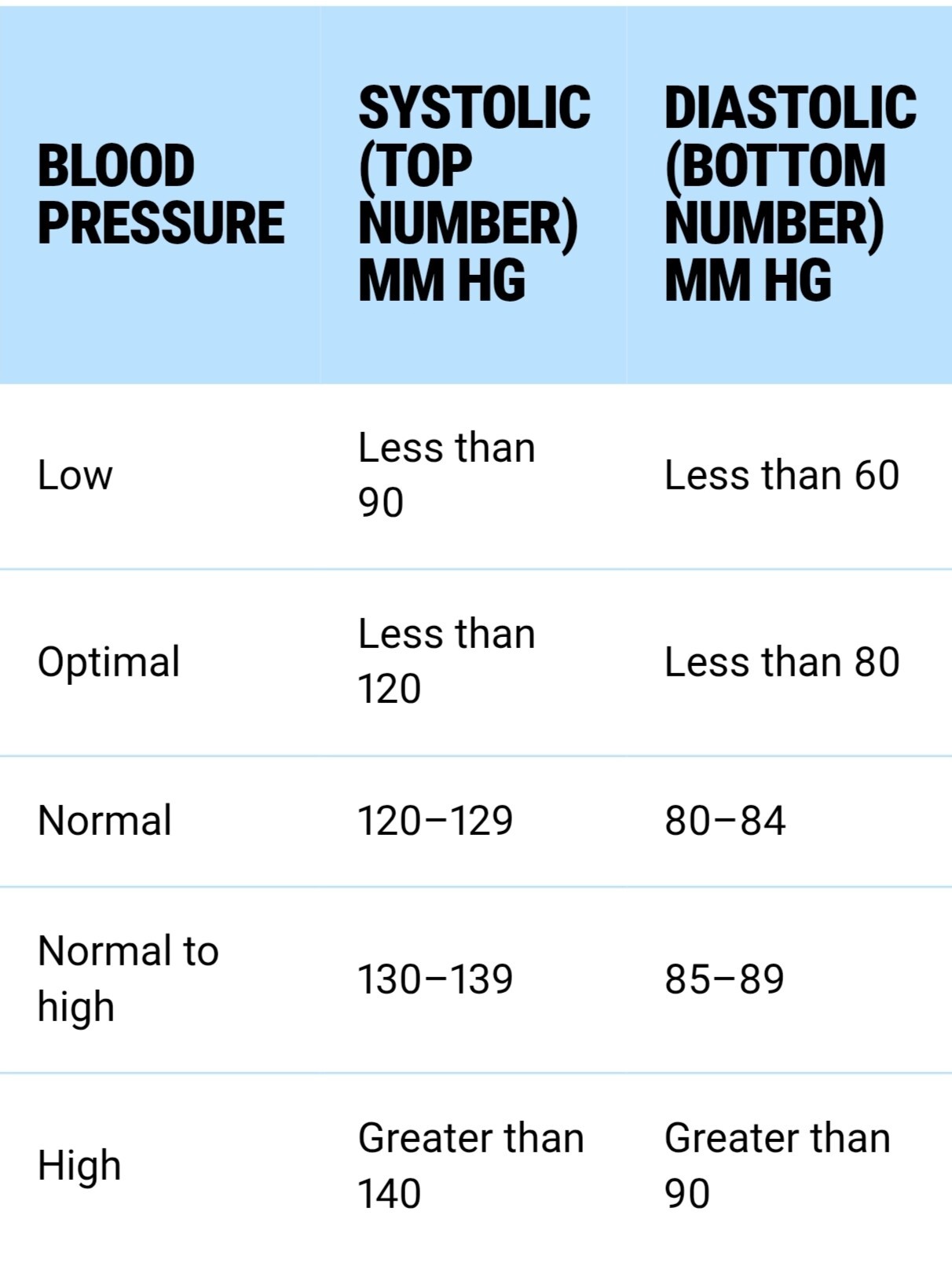
High BP is called hypertension
Low BP is called hypotension
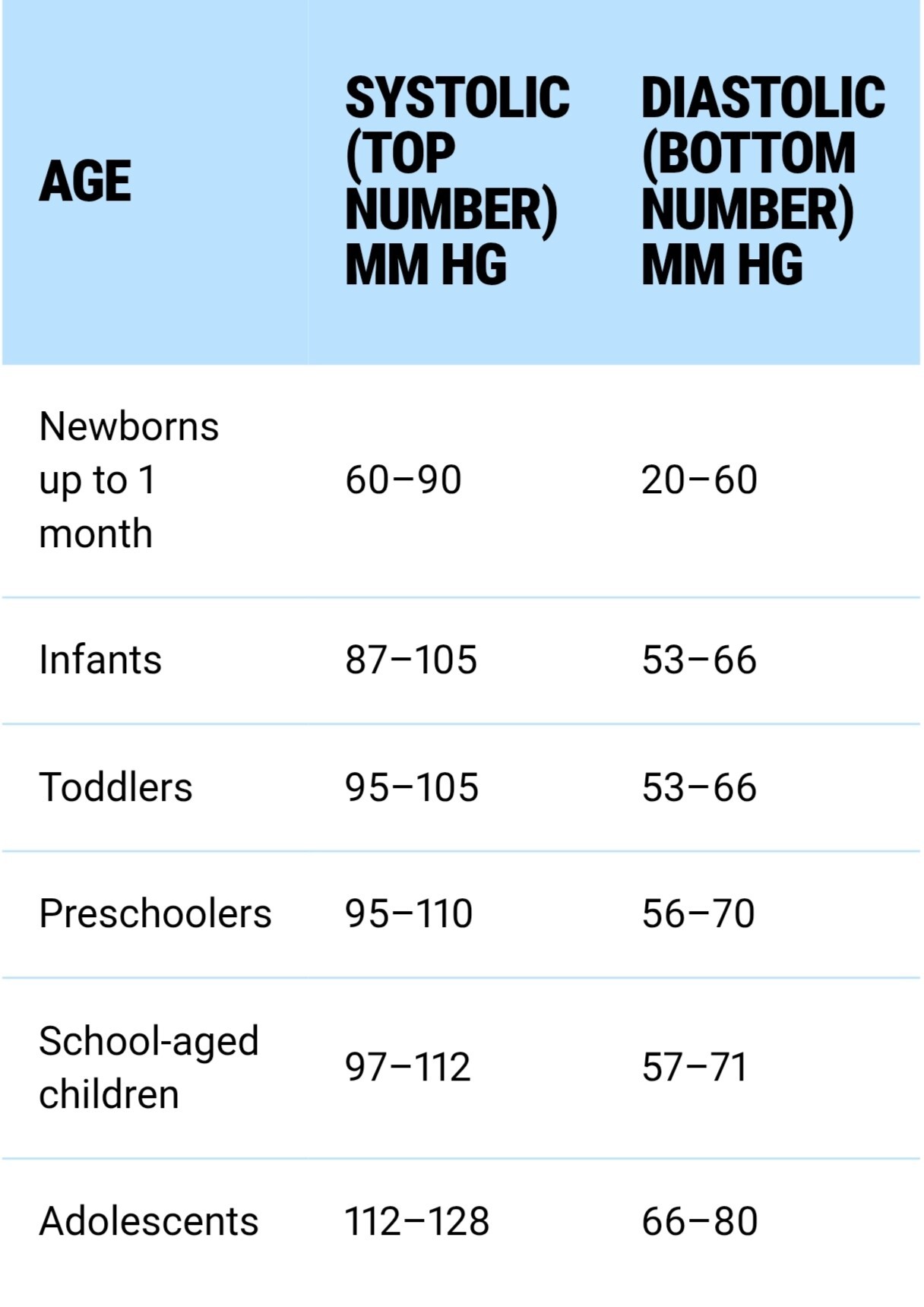
According to age group
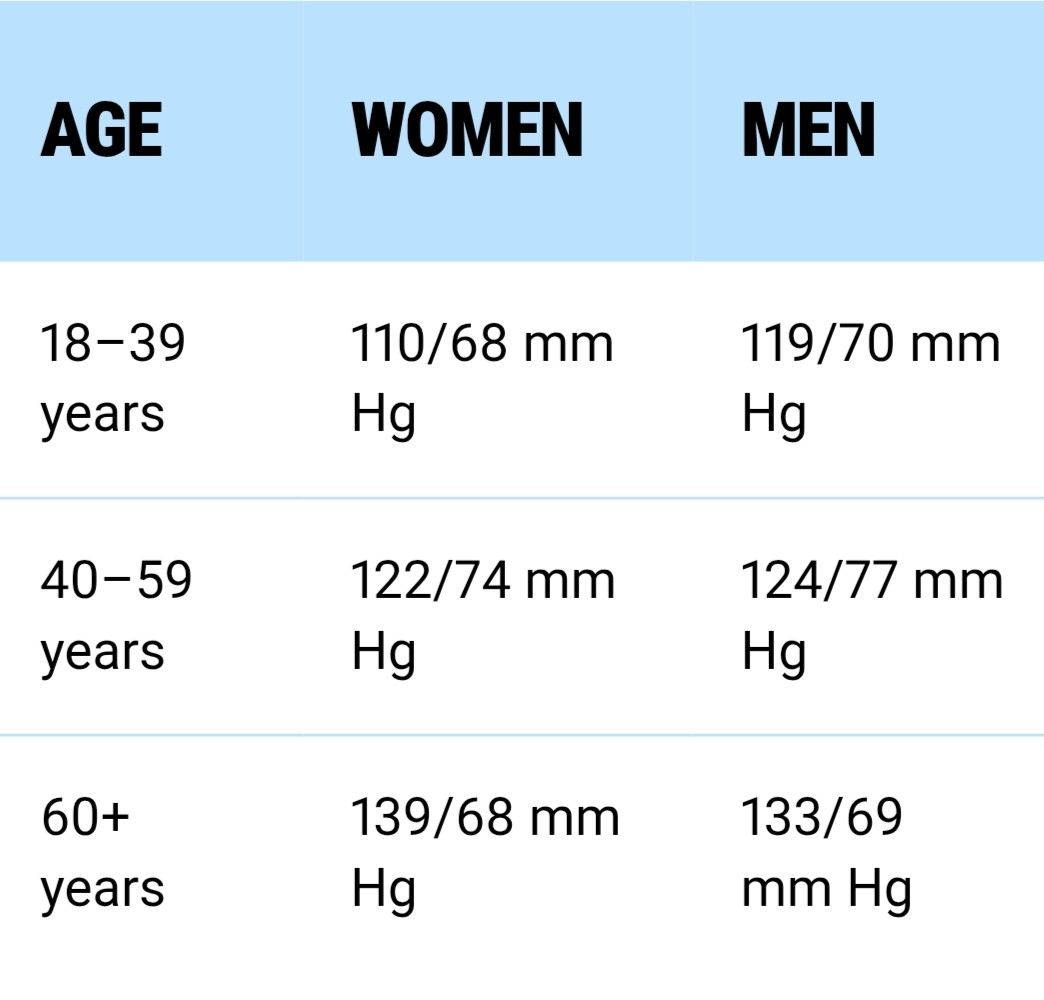
According to gender
High blood pressure has no symptoms and cannot be identified clinically. Regular monitoring is required to detect changes in pressure variation. Undetected high BP could become life-threatening and requires early monitoring and management.
Uncontrolled blood pressure can damage vital organs over time, including:
The heart (heart attack, heart failure)
The brain (stroke, cognitive decline)
The kidneys (chronic kidney disease)
The eyes (retinopathy, vision loss)
Blood pressure readings help healthcare providers determine whether lifestyle changes, medications, or adjustments in therapy are needed. For patients already on treatment, monitoring confirms whether interventions are effective.
Some individuals have:
White-coat hypertension: Elevated readings only in hospitals while seeing people wearing white coats
Masked hypertension: Normal readings in clinics and hospitals but high readings at home
For people with diabetes, kidney disease, cardiovascular disease, or during pregnancy, blood pressure monitoring is a critical part of ongoing care and risk reduction.
Healthy adults: At least once every 1–2 years
People with elevated readings or risk factors: As advised by a healthcare provider
Individuals with hypertension: Regular home monitoring, often daily or several times per week
Blood pressure refers to the pressure within the blood vessels as the blood rushes through them. Blood pressure could be an important indicator of heart function and may have various risk factors.
Systolic blood pressure - Pressure within the blood vessels when the heart contracts. Normal value: 120 mmHg (110 - 140 mmHg)
Diastolic blood pressure - Pressure within the blood vessels when the heart relaxes. Normal value: 80 mmHg (60 - 80 mmHg)
Denoted usually as 120/80 mmHg
Age: Increases with age
Sex: In females, till menopause is 5 mmHg less than in males
Body built: More in obese individuals
Diurnal variations: Pressure is slightly lower in the morning
After meals: Increases for a few hours after meals
During sleep: Reduces by up to 15 - 20 mmHg during deep sleep. Increases slightly when associated with dreams
Emotional conditions: Increases during excitement or anxiety due to adrenaline
After exercise: Increases based on intensity
According to general values
High BP is called hypertension
Low BP is called hypotension
According to age group
According to gender
High blood pressure has no symptoms and cannot be identified clinically. Regular monitoring is required to detect changes in pressure variation. Undetected high BP could become life-threatening and requires early monitoring and management.
Uncontrolled blood pressure can damage vital organs over time, including:
The heart (heart attack, heart failure)
The brain (stroke, cognitive decline)
The kidneys (chronic kidney disease)
The eyes (retinopathy, vision loss)
Blood pressure readings help healthcare providers determine whether lifestyle changes, medications, or adjustments in therapy are needed. For patients already on treatment, monitoring confirms whether interventions are effective.
Some individuals have:
White-coat hypertension: Elevated readings only in hospitals while seeing people wearing white coats
Masked hypertension: Normal readings in clinics and hospitals but high readings at home
For people with diabetes, kidney disease, cardiovascular disease, or during pregnancy, blood pressure monitoring is a critical part of ongoing care and risk reduction.
Healthy adults: At least once every 1–2 years
People with elevated readings or risk factors: As advised by a healthcare provider
Individuals with hypertension: Regular home monitoring, often daily or several times per week
Blood pressure refers to the pressure within the blood vessels as the blood rushes through them. Blood pressure could be an important indicator of heart function and may have various risk factors.
Systolic blood pressure - Pressure within the blood vessels when the heart contracts. Normal value: 120 mmHg (110 - 140 mmHg)
Diastolic blood pressure - Pressure within the blood vessels when the heart relaxes. Normal value: 80 mmHg (60 - 80 mmHg)
Denoted usually as 120/80 mmHg
Age: Increases with age
Sex: In females, till menopause is 5 mmHg less than in males
Body built: More in obese individuals
Diurnal variations: Pressure is slightly lower in the morning
After meals: Increases for a few hours after meals
During sleep: Reduces by up to 15 - 20 mmHg during deep sleep. Increases slightly when associated with dreams
Emotional conditions: Increases during excitement or anxiety due to adrenaline
After exercise: Increases based on intensity
According to general values
High BP is called hypertension
Low BP is called hypotension
According to age group
According to gender
High blood pressure has no symptoms and cannot be identified clinically. Regular monitoring is required to detect changes in pressure variation. Undetected high BP could become life-threatening and requires early monitoring and management.
Uncontrolled blood pressure can damage vital organs over time, including:
The heart (heart attack, heart failure)
The brain (stroke, cognitive decline)
The kidneys (chronic kidney disease)
The eyes (retinopathy, vision loss)
Blood pressure readings help healthcare providers determine whether lifestyle changes, medications, or adjustments in therapy are needed. For patients already on treatment, monitoring confirms whether interventions are effective.
Some individuals have:
White-coat hypertension: Elevated readings only in hospitals while seeing people wearing white coats
Masked hypertension: Normal readings in clinics and hospitals but high readings at home
For people with diabetes, kidney disease, cardiovascular disease, or during pregnancy, blood pressure monitoring is a critical part of ongoing care and risk reduction.
Healthy adults: At least once every 1–2 years
People with elevated readings or risk factors: As advised by a healthcare provider
Individuals with hypertension: Regular home monitoring, often daily or several times per week

This is such a helpful post! Thanks for sharing these insights. Looking forward to more content like this.

Totally agree! The examples really helped clarify the concepts.

Great breakdown. I've been looking for something like this for a while.

This comment is pending approval.
Explore Topics

0%
Explore Topics
0%