Are you ready for emergencies?
Is Basic Life Support training necessary for medical students?



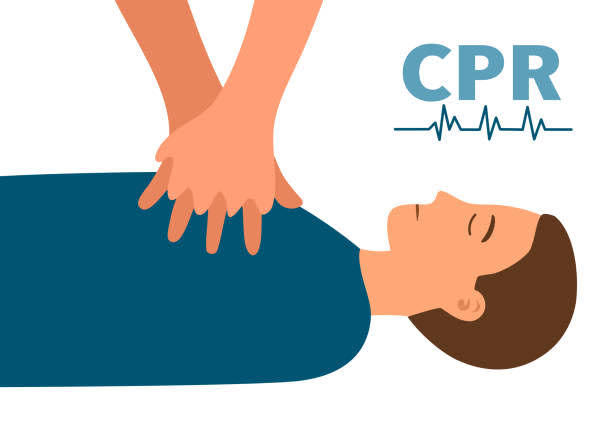
Basic life support may seem simple. As medical professionals, we are trained to diagnose, treat, and review patients, but emergencies can happen anytime. It could be in the form of cardiac arrest, anaphylactic shock, choking, stroke, etc. Immediate care must be provided for such cases, and even a second delay is a life lost. As medical professionals, we may be able to save a few if we are well-versed in the basics of basic life support.
Life is unpredictable. People who are alive right at this moment may not be alive to see the next second. Basic life support is an essential skill in managing emergency conditions. It includes
Cardiopulmonary resuscitation
Valsalva maneuver for choking
Airway management
Use of AED and defibrillators
Though the training is done with dummies, the training and level of skill obtained are applicable for emergencies. The basic essence of how to save a life is obtained. It provides confidence and empowerment to deal with real-life situations.
Out-of-hospital cardiac arrest (OHCA) is a public health burden accounting for nearly 10% of global mortality and 50% of cardiovascular deaths
Bystander CPR saves lives. When healthcare workers are educated in the techniques and procedures, they can save countless lives. Though doing proper CPR requires extensive training, knowing the basics can help protect thousands of people by doing Bystander CPR.
Most of the cardiac arrests were witnessed (96%), with medical personnel (73%) and relatives (23%) being the most common witnesses
Providing basic life support can be teamwork, with assistance required in every stage. Doing a single-person CPR is possible, but it results in easier fatigue and decreased quality of CPR. Providing training helps to build teamwork and improve communication skills.

Various efforts are being taken to reduce deaths due to a lack of CPR. Providing CPR training to healthcare workers, especially medical students, can prove to be fruitful in preventing out-of-hospital cardiac arrest cases.
Do you know BLS? Are you willing to save lives?
Basic life support may seem simple. As medical professionals, we are trained to diagnose, treat, and review patients, but emergencies can happen anytime. It could be in the form of cardiac arrest, anaphylactic shock, choking, stroke, etc. Immediate care must be provided for such cases, and even a second delay is a life lost. As medical professionals, we may be able to save a few if we are well-versed in the basics of basic life support.
Life is unpredictable. People who are alive right at this moment may not be alive to see the next second. Basic life support is an essential skill in managing emergency conditions. It includes
Cardiopulmonary resuscitation
Valsalva maneuver for choking
Airway management
Use of AED and defibrillators
Though the training is done with dummies, the training and level of skill obtained are applicable for emergencies. The basic essence of how to save a life is obtained. It provides confidence and empowerment to deal with real-life situations.
Out-of-hospital cardiac arrest (OHCA) is a public health burden accounting for nearly 10% of global mortality and 50% of cardiovascular deaths
Bystander CPR saves lives. When healthcare workers are educated in the techniques and procedures, they can save countless lives. Though doing proper CPR requires extensive training, knowing the basics can help protect thousands of people by doing Bystander CPR.
Most of the cardiac arrests were witnessed (96%), with medical personnel (73%) and relatives (23%) being the most common witnesses
Providing basic life support can be teamwork, with assistance required in every stage. Doing a single-person CPR is possible, but it results in easier fatigue and decreased quality of CPR. Providing training helps to build teamwork and improve communication skills.
Various efforts are being taken to reduce deaths due to a lack of CPR. Providing CPR training to healthcare workers, especially medical students, can prove to be fruitful in preventing out-of-hospital cardiac arrest cases.
Do you know BLS? Are you willing to save lives?
Basic life support may seem simple. As medical professionals, we are trained to diagnose, treat, and review patients, but emergencies can happen anytime. It could be in the form of cardiac arrest, anaphylactic shock, choking, stroke, etc. Immediate care must be provided for such cases, and even a second delay is a life lost. As medical professionals, we may be able to save a few if we are well-versed in the basics of basic life support.
Life is unpredictable. People who are alive right at this moment may not be alive to see the next second. Basic life support is an essential skill in managing emergency conditions. It includes
Cardiopulmonary resuscitation
Valsalva maneuver for choking
Airway management
Use of AED and defibrillators
Though the training is done with dummies, the training and level of skill obtained are applicable for emergencies. The basic essence of how to save a life is obtained. It provides confidence and empowerment to deal with real-life situations.
Out-of-hospital cardiac arrest (OHCA) is a public health burden accounting for nearly 10% of global mortality and 50% of cardiovascular deaths
Bystander CPR saves lives. When healthcare workers are educated in the techniques and procedures, they can save countless lives. Though doing proper CPR requires extensive training, knowing the basics can help protect thousands of people by doing Bystander CPR.
Most of the cardiac arrests were witnessed (96%), with medical personnel (73%) and relatives (23%) being the most common witnesses
Providing basic life support can be teamwork, with assistance required in every stage. Doing a single-person CPR is possible, but it results in easier fatigue and decreased quality of CPR. Providing training helps to build teamwork and improve communication skills.
Various efforts are being taken to reduce deaths due to a lack of CPR. Providing CPR training to healthcare workers, especially medical students, can prove to be fruitful in preventing out-of-hospital cardiac arrest cases.
Do you know BLS? Are you willing to save lives?

This is such a helpful post! Thanks for sharing these insights. Looking forward to more content like this.

Totally agree! The examples really helped clarify the concepts.

Great breakdown. I've been looking for something like this for a while.

This comment is pending approval.
Explore Topics

0%
Explore Topics
0%