Decoding your blood work
The results of the blood test may be difficult to interpret.



Blood results could help understand the basic health of an individual. They could be a great investigation for diagnosing various diseases that could usually go unnoticed and may require medical assistance. A final test result may usually show values that may be confusing and mysterious. Let's see how these simple values could be a possible diagnosis of more serious complications.
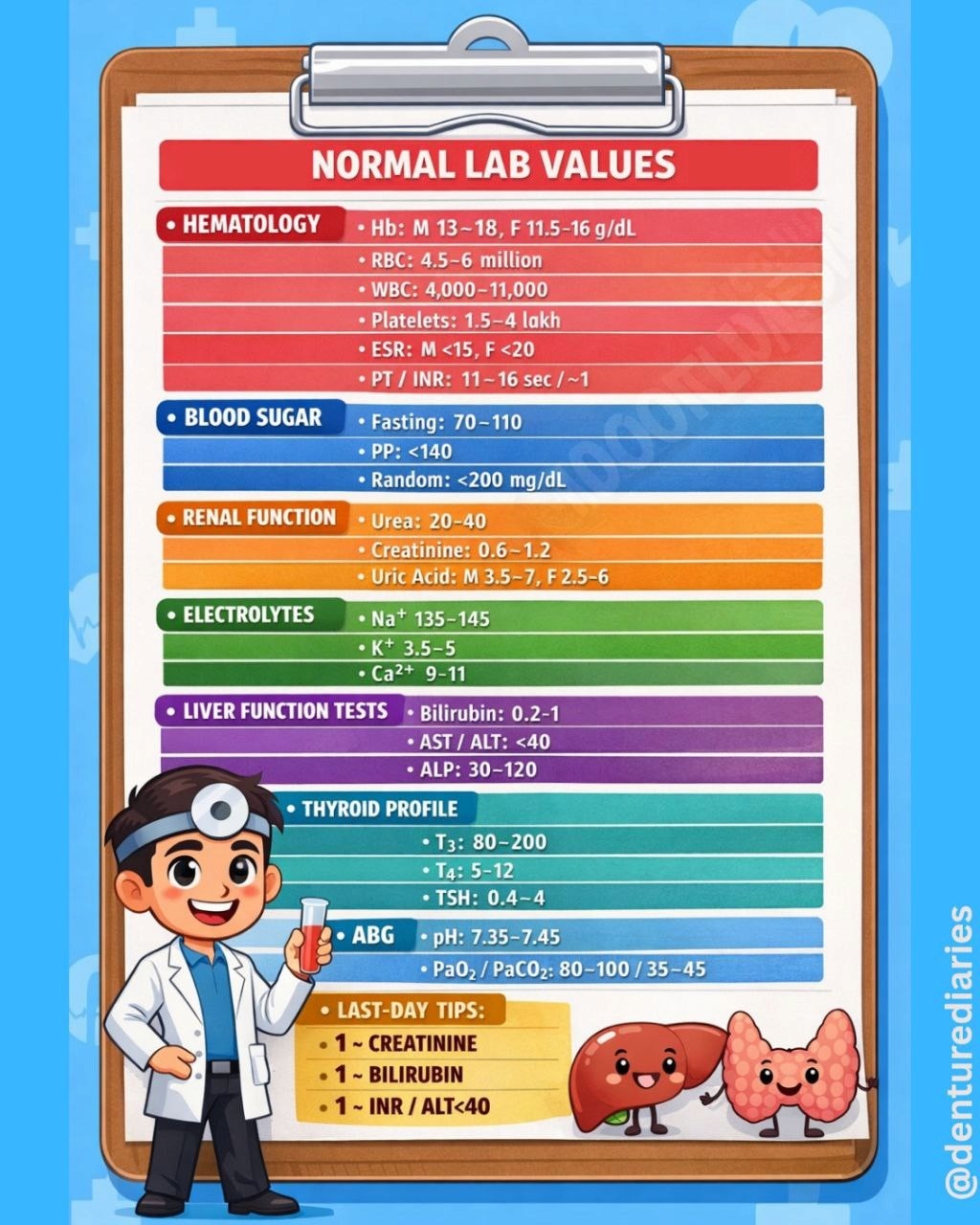
The normal values are usually a range of numbers that help the clinician to keep a standardized reference value. When the values are lower or higher than the reference value, it may be considered an abnormality. However, these values may not always be the same for every individual, as they could change based on age, sex, and medical history. This could only be considered as an initial provisional diagnosis, and further investigations may help identify the disease.
These tell how well your blood carries oxygen.
Low levels - Anemia, blood loss, or nutritional deficiencies
High levels - Dehydration, smoking, or lung conditions
White blood cells fight infection.
High WBC - Infection, inflammation, stress, or steroid use
Low WBC - Viral infections or certain medications
Platelets help your blood clot.
Low platelets increase bleeding risk
High platelets - Inflammation or iron deficiency
These show how well your kidneys filter waste.
High levels - Reduced kidney function or dehydration
Muscle mass can affect results
Measures sugar in your blood.
High glucose - Diabetes or prediabetes
Fasting vs. non-fasting levels matter
These control fluid balance, nerves, and muscles.
Abnormal levels - Fatigue, cramps, confusion, or heart rhythm issues
Levels can change due to dehydration, medications, or illness
These include ALT, AST, ALP, and bilirubin.
Elevated levels - Medications, alcohol, fatty liver, or infections
Mild elevations are often temporary
This checks heart disease risk.
LDL (“bad cholesterol”) – higher levels increase heart risk
HDL (“good cholesterol”) – higher levels are protective
Triglycerides – related to diet, weight, and blood sugar
These measure thyroid hormone levels.
High TSH - Underactive thyroid
Low TSH - Overactive thyroid
Blood results could help understand the basic health of an individual. They could be a great investigation for diagnosing various diseases that could usually go unnoticed and may require medical assistance. A final test result may usually show values that may be confusing and mysterious. Let's see how these simple values could be a possible diagnosis of more serious complications.
The normal values are usually a range of numbers that help the clinician to keep a standardized reference value. When the values are lower or higher than the reference value, it may be considered an abnormality. However, these values may not always be the same for every individual, as they could change based on age, sex, and medical history. This could only be considered as an initial provisional diagnosis, and further investigations may help identify the disease.
These tell how well your blood carries oxygen.
Low levels - Anemia, blood loss, or nutritional deficiencies
High levels - Dehydration, smoking, or lung conditions
White blood cells fight infection.
High WBC - Infection, inflammation, stress, or steroid use
Low WBC - Viral infections or certain medications
Platelets help your blood clot.
Low platelets increase bleeding risk
High platelets - Inflammation or iron deficiency
These show how well your kidneys filter waste.
High levels - Reduced kidney function or dehydration
Muscle mass can affect results
Measures sugar in your blood.
High glucose - Diabetes or prediabetes
Fasting vs. non-fasting levels matter
These control fluid balance, nerves, and muscles.
Abnormal levels - Fatigue, cramps, confusion, or heart rhythm issues
Levels can change due to dehydration, medications, or illness
These include ALT, AST, ALP, and bilirubin.
Elevated levels - Medications, alcohol, fatty liver, or infections
Mild elevations are often temporary
This checks heart disease risk.
LDL (“bad cholesterol”) – higher levels increase heart risk
HDL (“good cholesterol”) – higher levels are protective
Triglycerides – related to diet, weight, and blood sugar
These measure thyroid hormone levels.
High TSH - Underactive thyroid
Low TSH - Overactive thyroid
Blood results could help understand the basic health of an individual. They could be a great investigation for diagnosing various diseases that could usually go unnoticed and may require medical assistance. A final test result may usually show values that may be confusing and mysterious. Let's see how these simple values could be a possible diagnosis of more serious complications.
The normal values are usually a range of numbers that help the clinician to keep a standardized reference value. When the values are lower or higher than the reference value, it may be considered an abnormality. However, these values may not always be the same for every individual, as they could change based on age, sex, and medical history. This could only be considered as an initial provisional diagnosis, and further investigations may help identify the disease.
These tell how well your blood carries oxygen.
Low levels - Anemia, blood loss, or nutritional deficiencies
High levels - Dehydration, smoking, or lung conditions
White blood cells fight infection.
High WBC - Infection, inflammation, stress, or steroid use
Low WBC - Viral infections or certain medications
Platelets help your blood clot.
Low platelets increase bleeding risk
High platelets - Inflammation or iron deficiency
These show how well your kidneys filter waste.
High levels - Reduced kidney function or dehydration
Muscle mass can affect results
Measures sugar in your blood.
High glucose - Diabetes or prediabetes
Fasting vs. non-fasting levels matter
These control fluid balance, nerves, and muscles.
Abnormal levels - Fatigue, cramps, confusion, or heart rhythm issues
Levels can change due to dehydration, medications, or illness
These include ALT, AST, ALP, and bilirubin.
Elevated levels - Medications, alcohol, fatty liver, or infections
Mild elevations are often temporary
This checks heart disease risk.
LDL (“bad cholesterol”) – higher levels increase heart risk
HDL (“good cholesterol”) – higher levels are protective
Triglycerides – related to diet, weight, and blood sugar
These measure thyroid hormone levels.
High TSH - Underactive thyroid
Low TSH - Overactive thyroid

This is such a helpful post! Thanks for sharing these insights. Looking forward to more content like this.

Totally agree! The examples really helped clarify the concepts.

Great breakdown. I've been looking for something like this for a while.

This comment is pending approval.
Explore Topics

0%
Explore Topics
0%