Periodontal ligament

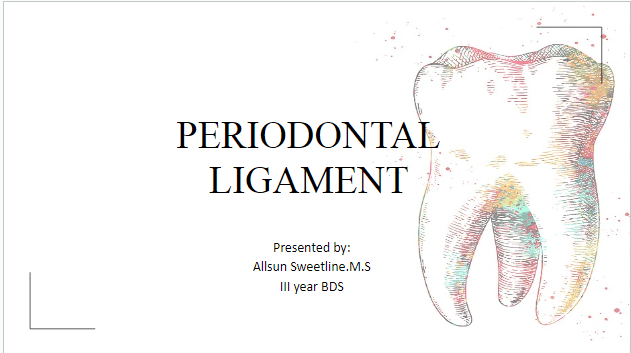
A detailed view of the periodontal ligament

2 min read

2 min read

Periodontal ligament image

Periodontal ligament - Click here

The periodontal ligament is a specialized connective tissue that occupies the space between the cementum of the tooth root and the alveolar bone. It plays a critical role in tooth support, function, and periodontal health.

The PDL is composed of collagen fiber bundles (primarily Sharpey’s fibers), fibroblasts, cementoblasts, osteoblasts, undifferentiated mesenchymal cells, blood vessels, and nerve fibers. Principal fiber groups include alveolar crest, horizontal, oblique, apical, and interradicular fibers, with oblique fibers being the most abundant and functionally important.

Functions of the periodontal ligament include tooth support and shock absorption, sensory perception (proprioception and pain), nutritive supply, and formative and remodeling functions for cementum and alveolar bone. The PDL is essential for adaptive response to occlusal forces and orthodontic tooth movement.

Explore Topics

Icon

0%

Explore Topics

Icon

0%

Create a free website with Framer, the website builder loved by startups, designers and agencies.