CRISPR in Dentistry: Gene Editing and Future Applications

Explore CRISPR gene editing in dentistry, including applications in oral diseases, regenerative therapy, and the future of precision dental care.

2 min read

2 min read

CRISPR in dentistry

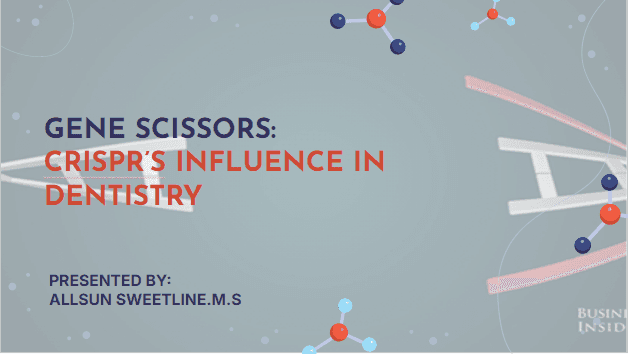
Gene scissors: CRISPR's influence in dentistry - Click here

CRISPR-Cas technology, often referred to as gene scissors, is transforming dentistry by enabling precise gene editing at the molecular level. In dental research and clinical applications, CRISPR shows promise in regenerative dentistry, oral cancer therapy, and management of genetic dental disorders.

CRISPR has been explored for stimulating dentin–pulp regeneration, modifying stem cells for periodontal tissue engineering, and targeting oncogenes involved in oral squamous cell carcinoma. It also offers potential in correcting mutations responsible for conditions such as amelogenesis imperfecta and dentinogenesis imperfecta.

Although still largely experimental, CRISPR technology represents a significant advancement toward personalized and minimally invasive dental therapies, with ongoing research focused on safety, ethical considerations, and clinical translation.

CRISPR in dentistry
CRISPR in dentistry

Gene scissors: CRISPR's influence in dentistry - Click here

CRISPR-Cas technology, often referred to as gene scissors, is transforming dentistry by enabling precise gene editing at the molecular level. In dental research and clinical applications, CRISPR shows promise in regenerative dentistry, oral cancer therapy, and management of genetic dental disorders.

CRISPR has been explored for stimulating dentin–pulp regeneration, modifying stem cells for periodontal tissue engineering, and targeting oncogenes involved in oral squamous cell carcinoma. It also offers potential in correcting mutations responsible for conditions such as amelogenesis imperfecta and dentinogenesis imperfecta.

Although still largely experimental, CRISPR technology represents a significant advancement toward personalized and minimally invasive dental therapies, with ongoing research focused on safety, ethical considerations, and clinical translation.

CRISPR in dentistry
CRISPR in dentistry

Gene scissors: CRISPR's influence in dentistry - Click here

CRISPR-Cas technology, often referred to as gene scissors, is transforming dentistry by enabling precise gene editing at the molecular level. In dental research and clinical applications, CRISPR shows promise in regenerative dentistry, oral cancer therapy, and management of genetic dental disorders.

CRISPR has been explored for stimulating dentin–pulp regeneration, modifying stem cells for periodontal tissue engineering, and targeting oncogenes involved in oral squamous cell carcinoma. It also offers potential in correcting mutations responsible for conditions such as amelogenesis imperfecta and dentinogenesis imperfecta.

Although still largely experimental, CRISPR technology represents a significant advancement toward personalized and minimally invasive dental therapies, with ongoing research focused on safety, ethical considerations, and clinical translation.

Comments

Guest
Sarah Chen
Sarah Chen2 hours ago

This is such a helpful post! Thanks for sharing these insights. Looking forward to more content like this.

Alex Rivera
Alex Rivera1 hour ago

Totally agree! The examples really helped clarify the concepts.

Jordan Park
Jordan Park4 hours ago

Great breakdown. I've been looking for something like this for a while.

Anonymous
AnonymousJust now

This comment is pending approval.

Explore Topics

Icon

0%

Explore Topics

Icon

0%

Create a free website with Framer, the website builder loved by startups, designers and agencies.