What Happens During a Root Canal? Step-by-Step Guide
Learn what happens during a root canal treatment, including procedure steps, pain management, and recovery to ease anxiety and improve understanding.



Root canal treatment (RCT), though it seems like an elaborate process, is a simple procedure to relieve patients of their dental pain and swelling. This process involves various steps that help provide complete elimination of the diseased condition of the tooth while preserving the tooth.
Continuous pain or intermittent pain
Pain on taking hot and cold food
Pain on exposure to wind
Pain during night
Pain on biting or tapping
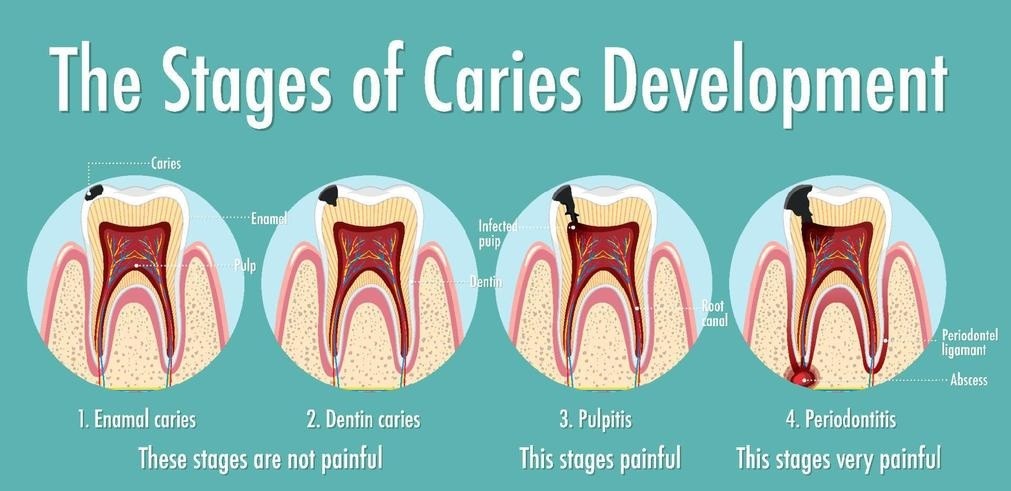
Dental caries approaching innermost layer of tooth or radiolucency near root of tooth during x-ray
✔️ Confirmation done using clinical examination, radiographs, and pulp vitality tests to check the vitality of the tooth
Local anesthesia is provided through injection at or near the infected tooth
It causes numbness and a feeling of swelling
No pain is felt. Only pressure is felt
The tooth is isolated using a rubber-like sheet called rubber dam
It helps to isolate the infected tooth from contamination by saliva during the procedure
Prevents accidental swallowing of contents
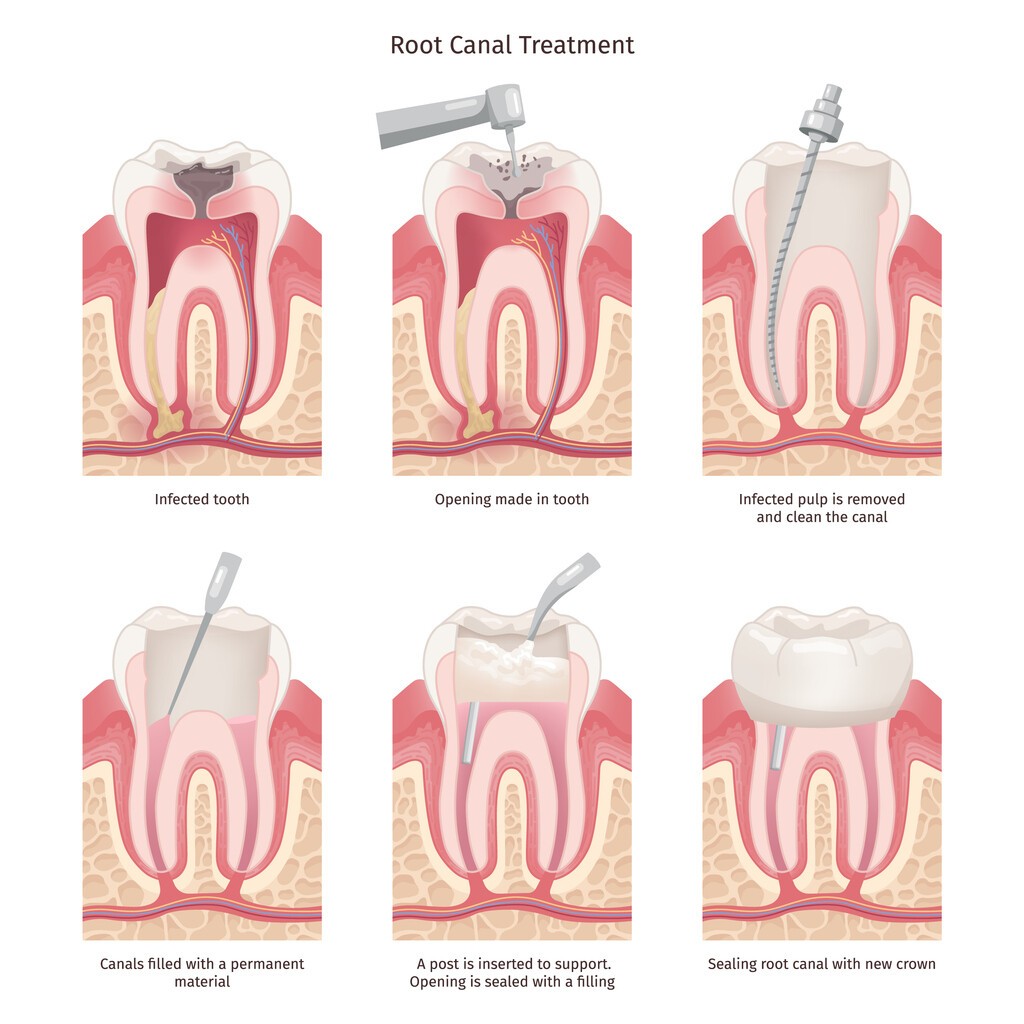
The tooth is drilled to provide a small opening to access the pulp (innermost part of tooth where blood vessels are seen) where the infection lies
The decayed part of the tooth is also removed during this process
The infected pulp is removed
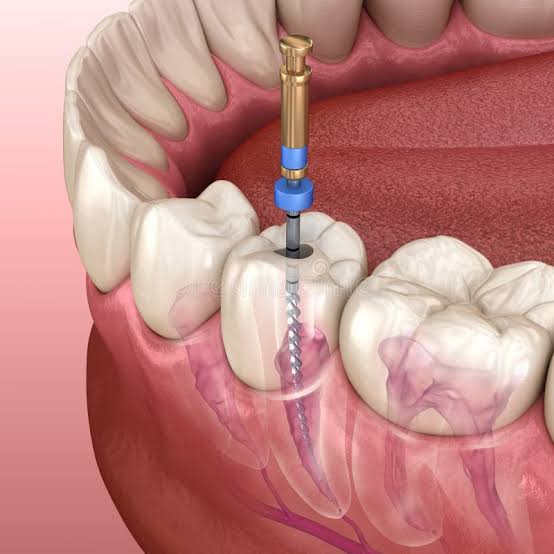
Small instruments called files are used to clean the root of the tooth
The length of the canal inside the tooth is measured using radiographs
The area of the canal may contain microbes which must be removed
Irrigants like saline are used to flush out the contents and the remaining pulp
The canal is shaped to remove a part of the infected tooth and also to allow the placement of filling material
Further disinfection of the tooth is done using other agents
A non-resorbable material called gutta percha is placed inside the prepared space
This provides a seal and prevents reinfection
It is then sealed either temporarily or permanently
A permanent filling or crown restores structure
Crowns protect weakened teeth from fracture
Restoration choice depends on remaining tooth structure
Mild tenderness may last a few days
Over-the-counter analgesics usually suffice
Normal chewing resumes after final restoration
Root canal success exceeds 90 percent in many studies
Proper restoration is critical for long-term survival
Untreated canals risk abscess formation and tooth loss
Root canals do not cause pain; infection causes pain
Tooth extraction does not eliminate infection risk
Saving the natural tooth preserves function and bone
Ingle JI, Bakland LK, Baumgartner JC. Ingle’s Endodontics.
Cohen S, Hargreaves KM. Pathways of the Pulp.
European Society of Endodontology. Quality guidelines for endodontic treatment.
Siqueira JF. Microbiology of endodontic infections.
Ng YL et al. Outcome of primary root canal treatment. Systematic review.
Root canal treatment (RCT), though it seems like an elaborate process, is a simple procedure to relieve patients of their dental pain and swelling. This process involves various steps that help provide complete elimination of the diseased condition of the tooth while preserving the tooth.
Continuous pain or intermittent pain
Pain on taking hot and cold food
Pain on exposure to wind
Pain during night
Pain on biting or tapping
Dental caries approaching innermost layer of tooth or radiolucency near root of tooth during x-ray
✔️ Confirmation done using clinical examination, radiographs, and pulp vitality tests to check the vitality of the tooth
Local anesthesia is provided through injection at or near the infected tooth
It causes numbness and a feeling of swelling
No pain is felt. Only pressure is felt
The tooth is isolated using a rubber-like sheet called rubber dam
It helps to isolate the infected tooth from contamination by saliva during the procedure
Prevents accidental swallowing of contents
The tooth is drilled to provide a small opening to access the pulp (innermost part of tooth where blood vessels are seen) where the infection lies
The decayed part of the tooth is also removed during this process
The infected pulp is removed
Small instruments called files are used to clean the root of the tooth
The length of the canal inside the tooth is measured using radiographs
The area of the canal may contain microbes which must be removed
Irrigants like saline are used to flush out the contents and the remaining pulp
The canal is shaped to remove a part of the infected tooth and also to allow the placement of filling material
Further disinfection of the tooth is done using other agents
A non-resorbable material called gutta percha is placed inside the prepared space
This provides a seal and prevents reinfection
It is then sealed either temporarily or permanently
A permanent filling or crown restores structure
Crowns protect weakened teeth from fracture
Restoration choice depends on remaining tooth structure
Mild tenderness may last a few days
Over-the-counter analgesics usually suffice
Normal chewing resumes after final restoration
Root canal success exceeds 90 percent in many studies
Proper restoration is critical for long-term survival
Untreated canals risk abscess formation and tooth loss
Root canals do not cause pain; infection causes pain
Tooth extraction does not eliminate infection risk
Saving the natural tooth preserves function and bone
Ingle JI, Bakland LK, Baumgartner JC. Ingle’s Endodontics.
Cohen S, Hargreaves KM. Pathways of the Pulp.
European Society of Endodontology. Quality guidelines for endodontic treatment.
Siqueira JF. Microbiology of endodontic infections.
Ng YL et al. Outcome of primary root canal treatment. Systematic review.
Root canal treatment (RCT), though it seems like an elaborate process, is a simple procedure to relieve patients of their dental pain and swelling. This process involves various steps that help provide complete elimination of the diseased condition of the tooth while preserving the tooth.
Continuous pain or intermittent pain
Pain on taking hot and cold food
Pain on exposure to wind
Pain during night
Pain on biting or tapping
Dental caries approaching innermost layer of tooth or radiolucency near root of tooth during x-ray
✔️ Confirmation done using clinical examination, radiographs, and pulp vitality tests to check the vitality of the tooth
Local anesthesia is provided through injection at or near the infected tooth
It causes numbness and a feeling of swelling
No pain is felt. Only pressure is felt
The tooth is isolated using a rubber-like sheet called rubber dam
It helps to isolate the infected tooth from contamination by saliva during the procedure
Prevents accidental swallowing of contents
The tooth is drilled to provide a small opening to access the pulp (innermost part of tooth where blood vessels are seen) where the infection lies
The decayed part of the tooth is also removed during this process
The infected pulp is removed
Small instruments called files are used to clean the root of the tooth
The length of the canal inside the tooth is measured using radiographs
The area of the canal may contain microbes which must be removed
Irrigants like saline are used to flush out the contents and the remaining pulp
The canal is shaped to remove a part of the infected tooth and also to allow the placement of filling material
Further disinfection of the tooth is done using other agents
A non-resorbable material called gutta percha is placed inside the prepared space
This provides a seal and prevents reinfection
It is then sealed either temporarily or permanently
A permanent filling or crown restores structure
Crowns protect weakened teeth from fracture
Restoration choice depends on remaining tooth structure
Mild tenderness may last a few days
Over-the-counter analgesics usually suffice
Normal chewing resumes after final restoration
Root canal success exceeds 90 percent in many studies
Proper restoration is critical for long-term survival
Untreated canals risk abscess formation and tooth loss
Root canals do not cause pain; infection causes pain
Tooth extraction does not eliminate infection risk
Saving the natural tooth preserves function and bone
Ingle JI, Bakland LK, Baumgartner JC. Ingle’s Endodontics.
Cohen S, Hargreaves KM. Pathways of the Pulp.
European Society of Endodontology. Quality guidelines for endodontic treatment.
Siqueira JF. Microbiology of endodontic infections.
Ng YL et al. Outcome of primary root canal treatment. Systematic review.

This is such a helpful post! Thanks for sharing these insights. Looking forward to more content like this.

Totally agree! The examples really helped clarify the concepts.

Great breakdown. I've been looking for something like this for a while.

This comment is pending approval.
Explore Topics

0%
Explore Topics
0%